Promoting a more gender balanced tech industry is not only important for women working on the field, but also crucial for design outcomes of digital outcomes and services. Research shows that diverse teams that combine different backgrounds and perspectives tend to deliver more innovative, customer-oriented solutions than homogeneous groups. In the tech sector, where gender imbalance remains pronounced, increasing diversity is not just a matter of fairness but also innovation and economic imperative.
The Gender Gap in Tech: Lost Potential
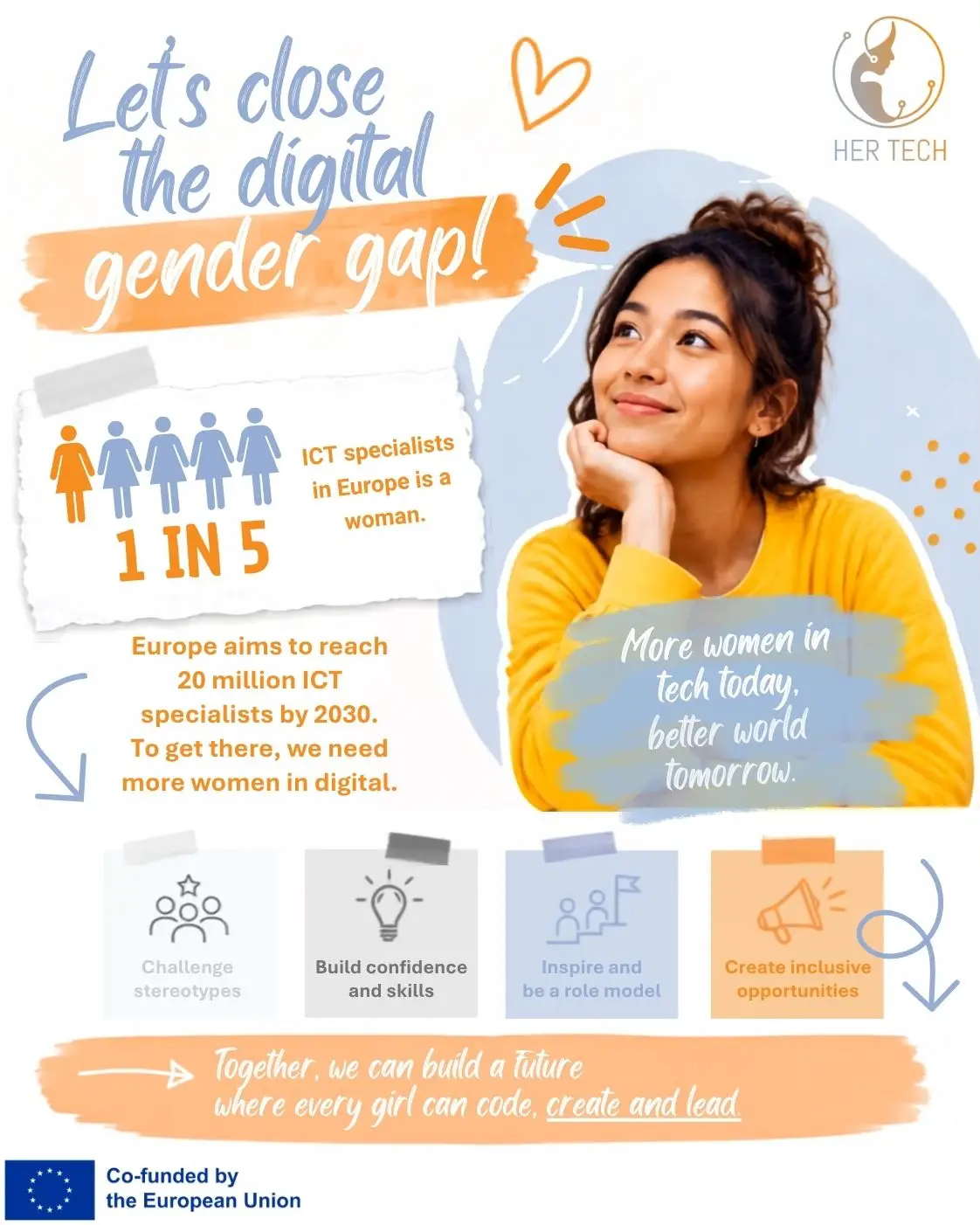
Technology products and services shape our society and economy increasingly. But in Europe, only 1 in 3 STEM graduates and 1 in 5 ICT specialists are women [1]. This means an enormous amount of creative potential is being left on the table. Having predominantly male development teams risks overlooking the perspectives and needs of half the population.
We see that more women in tech would translate into more user-friendly, inclusive solutions and a boost to innovation. In fact, EU analysts estimate that raising the share of women in ICT to ~45% by 2027 would significantly boost Europe’s GDP (by an estimated 260–600 billion euros) due to the expanded talent pool and creativity this would unleash [1].
How Diversity Drives Better Outcomes
Why do diverse teams tend to outperform? A body of scientific research and business evidence indicates that mixing people of different genders and backgrounds can support higher quality innovations and improve working teams’ performance. Here are three reasons why diversity in teams can lead to better outcomes:
1) Better customer insight
Diverse teams can be better at understanding diverse customer groups and their challenges. The reason seems to be that heterogeneous teams can draw on a wider range of experiences and cognitive approaches to tackle problems. For instance, a McKinsey analysis noted companies with greater ethnic and racial diversity were 35% more likely to financially outperform their industry peers partly because they better understand a broad customer base [2]. Likewise, another research found that organizations with above-average diversity are 70% more likely to capture new markets [3]. In short, a team that reflects users’ needs from wider perspectives can design products that resonate with wider groups of people.
2) Diversity in leadership boosts innovation capabilities
In a report published by BCG, companies with more diverse management teams derived 19% higher revenue from innovation on average (45% of revenue from new products/services versus only 26% in less diverse teams) [3]. “The most significant gains came from changing the makeup of the leadership team in terms of national origin of executives, range of industry backgrounds, gender balance, and career paths,” the research concluded. This suggests that diversity fuels creativity and out-of-the-box thinking, driving the development of new ideas and offerings.
3) Higher Employee Satisfaction
People tend to enjoy work more in diverse, inclusive environments, which leads to higher engagement and retention. When employees feel their perspectives are valued regardless of gender or background, job satisfaction rises [4]. Companies with a diverse workforce and an inclusive culture report better employee satisfaction scores. This positive team culture can then enhance collaboration, creativity and productivity in the long run.
Even though this short look on the matter is by no means comprehensive, there is a lot of research supportsing the idea that building a more gender-balanced tech industry is not just about equity – it would make our tech services more innovative, productive, and attuned to customers!
Initiatives to Close the Gender Gap in Tech
The HER TECH project’s current phase we are examining practical equality initiatives from the past ten years across Europe https://her-tech.eu/improving-gender-balance-what-works/. By analyzing programs, policies, and grassroots efforts that sought to interest women in tech, we hope to identify which approaches truly work.
Our study draws on academic literature, expert interviews, and an open online survey, ensuring both quantitative data and personal insights are considered. The end goal is to pinpoint successful strategies and develop a best-practices handbook for educators, companies, and policymakers to help attract and retain more women in ICT fields.
Sources
[1] Women in Digital | Shaping Europe’s digital future (2025)
https://digital-strategy.ec.europa.eu/en/policies/women-digital
[2] Dixon-Fyle, S., Dolan, K., Hunt, V., & Prince, S. (2020, June 18). Diversity wins: How inclusion matters.
Retrieved September 18, 2025, from https://www.mckinsey.com/featured-insights/diversity-and-inclusion/diversity-wins-how-inclusion-matters
https://instituteforpr.org/diversity-wins-how-inclusion-matters/
[3] BCG: How Diverse Teams Drive Workplace Innovation: By Rocío Lorenzo, Nicole Voigt, Miki Tsusaka, Matt Krentz, and Katie Abouzahr
https://www.bcg.com/publications/2018/how-diverse-leadership-teams-boost-innovation
[4] Loeb Leadership: How Does DEI Impact Employee Engagement And Retention