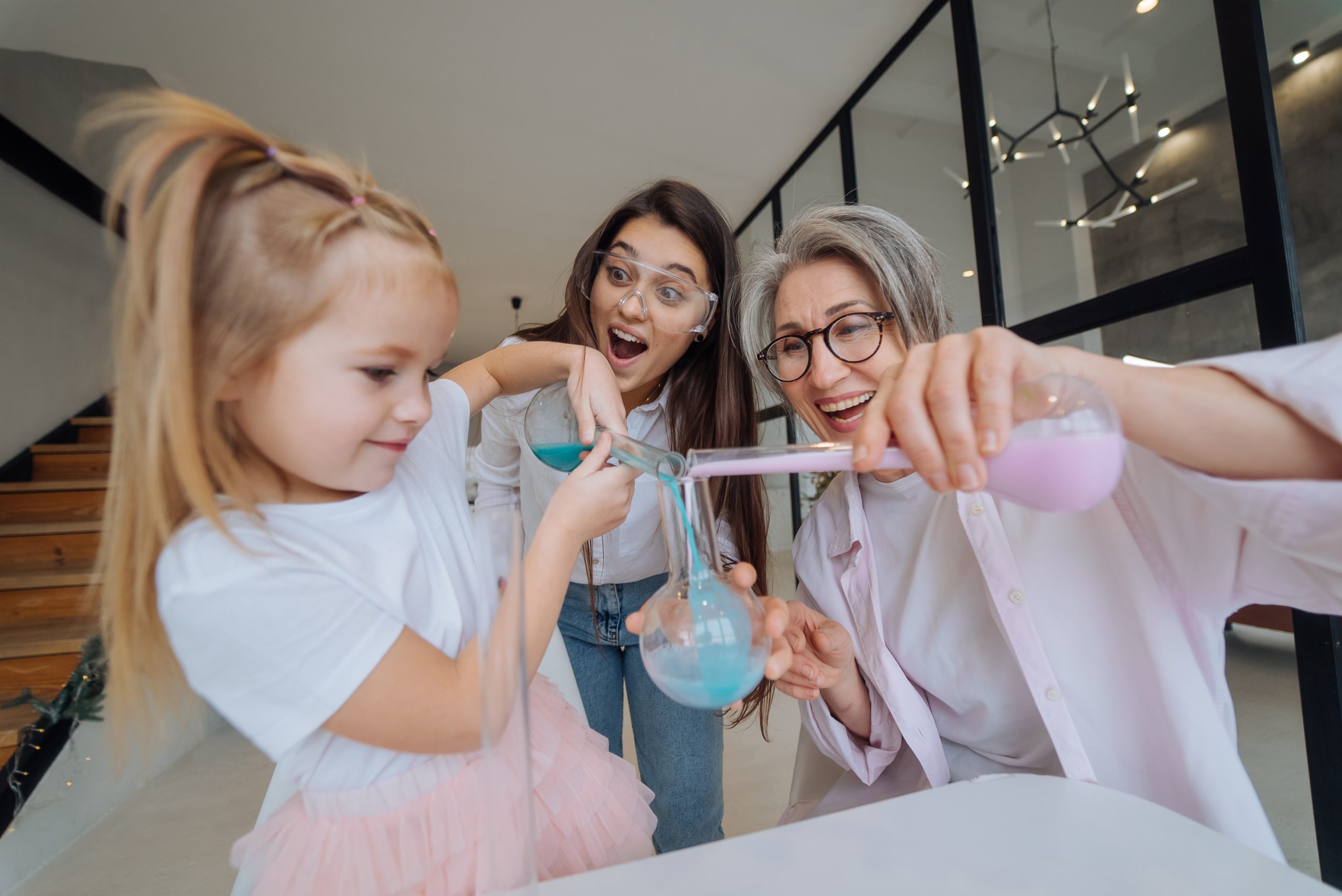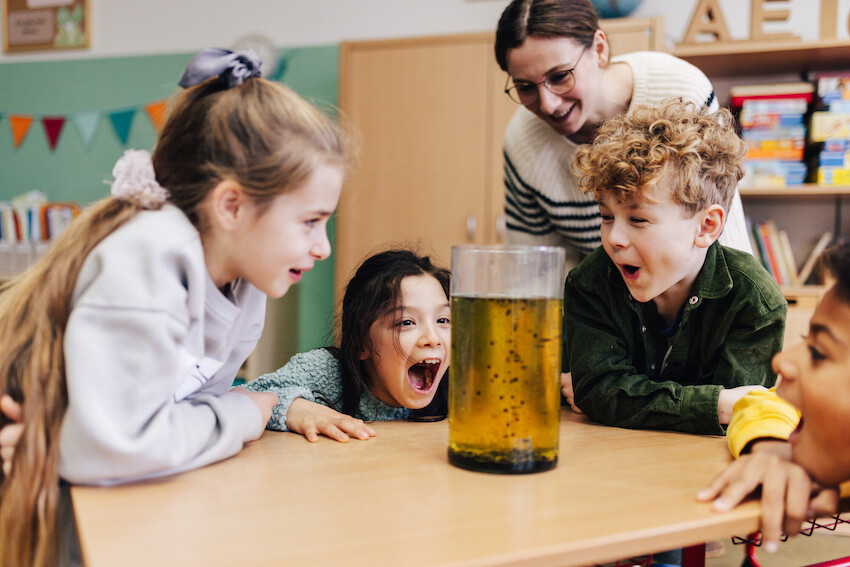
11 February marks the International Day of Women and Girls in Science. It is a good moment to pause and ask a simple question: when do girls start to feel that science might not be for them?
The uncomfortable answer is that it happens very early.
When confidence starts to drop
A well-known study by Lin Bian, Sarah-Jane Leslie and Andrei Cimpian (2017) explored how young children understand the idea of “brilliance”. Researchers showed children pictures of a woman and a man and asked which person was “really, really smart”.
At age five, children mostly chose a person of their own gender.
At age six, something changes. Girls begin to point to the man more often.
The second part of the experiment was even more telling. Children could choose between two games: one for children who “try really hard” and another for children who are “really smart”. At age five there was no difference between boys and girls. At age six, girls were already less likely to choose the game for those who “try really hard”.
This shift matters. It shows how quickly stereotypes can shape motivation and self-belief.
Women make up almost half of the global population, yet only around 4% of Nobel Prize laureates. The issue is not ability. It is confidence, expectations and the stories children absorb from the world around them.
Representation matters more than we think
Children learn from what they see, read and play with. The toys and stories we give them quietly shape what feels possible.
Instead of the stereotypical “pink appliances”, there are many inspiring books and creative materials that show girls and boys that science belongs to everyone.
LEGO Women of NASA (21312)
This set celebrates four pioneering women from NASA: astronomer Nancy Grace Roman, computer scientist Margaret Hamilton, astronaut Sally Ride and astronaut Mae Jemison. Through building and storytelling, children discover real women who shaped space exploration.

LEGO Tribute to Jane Goodall (40530)
Inspired by the famous primatologist and conservationist, this small set introduces children to wildlife research and environmental science through the story of Jane Goodall and her work with chimpanzees.

LEGO The Evolution of STEM (21355)
This set highlights key figures and discoveries from the history of science and technology, encouraging curiosity about how scientific knowledge evolves and how diverse people contribute to it.

LEGO Tribute to Amelia Earhart (40450)
A tribute to the aviation pioneer whose courage and achievements opened new paths for women in science, engineering and exploration.

Ada Twist, Scientist (books and animated series)
Based on the books by Andrea Beaty and illustrated by David Roberts, this story follows a curious girl who never stops asking questions. It celebrates persistence, experimentation, and the joy of discovering how the world works.
Little People, Big Dreams series
Written by Maria Isabel Sánchez Vegara and illustrated by various artists, these short biographies introduce children to inspiring figures from history, including scientists and explorers, in an accessible and engaging way.

https://littlepeoplebigdreams.com
Earhart by Torben Kuhlmann
These beautifully illustrated books combine storytelling with science and engineering themes, encouraging curiosity about flight, space, and invention.

https://www.penguin.de/buecher/torben-kuhlmann-earhart/hoerbuch-cd/9783844552423
Even without children in our immediate surroundings, these stories are worth exploring. They remind us that stereotypes learned in childhood often persist into adulthood.
The stereotypes do not disappear
A global L’Oréal report on women in science asked respondents what they believe women lack to reach top scientific positions.
The answers are striking.
22% said women lack rational thinking.
20% said they lack a practical mindset.
At the same time, society trusts women with the responsibility of raising children, making daily decisions, and managing complex responsibilities. The contradiction speaks for itself.
Changing the story together
Confidence is not built overnight. It grows from small signals repeated over time: the stories we tell, the role models we highlight, the encouragement we give.
Through the HER TECH project, partners across Europe work to understand how girls experience technology education and what helps them feel they belong in digital and scientific fields. Research shows that early experiences, supportive learning environments, and visible role models can make a lasting difference.
Science has never belonged to one gender. The challenge now is to ensure every child grows up believing that.
Because the earlier girls believe in their own potential, the more likely they are to remain curious, ambitious, and ready to explore the world of science.
Resources: