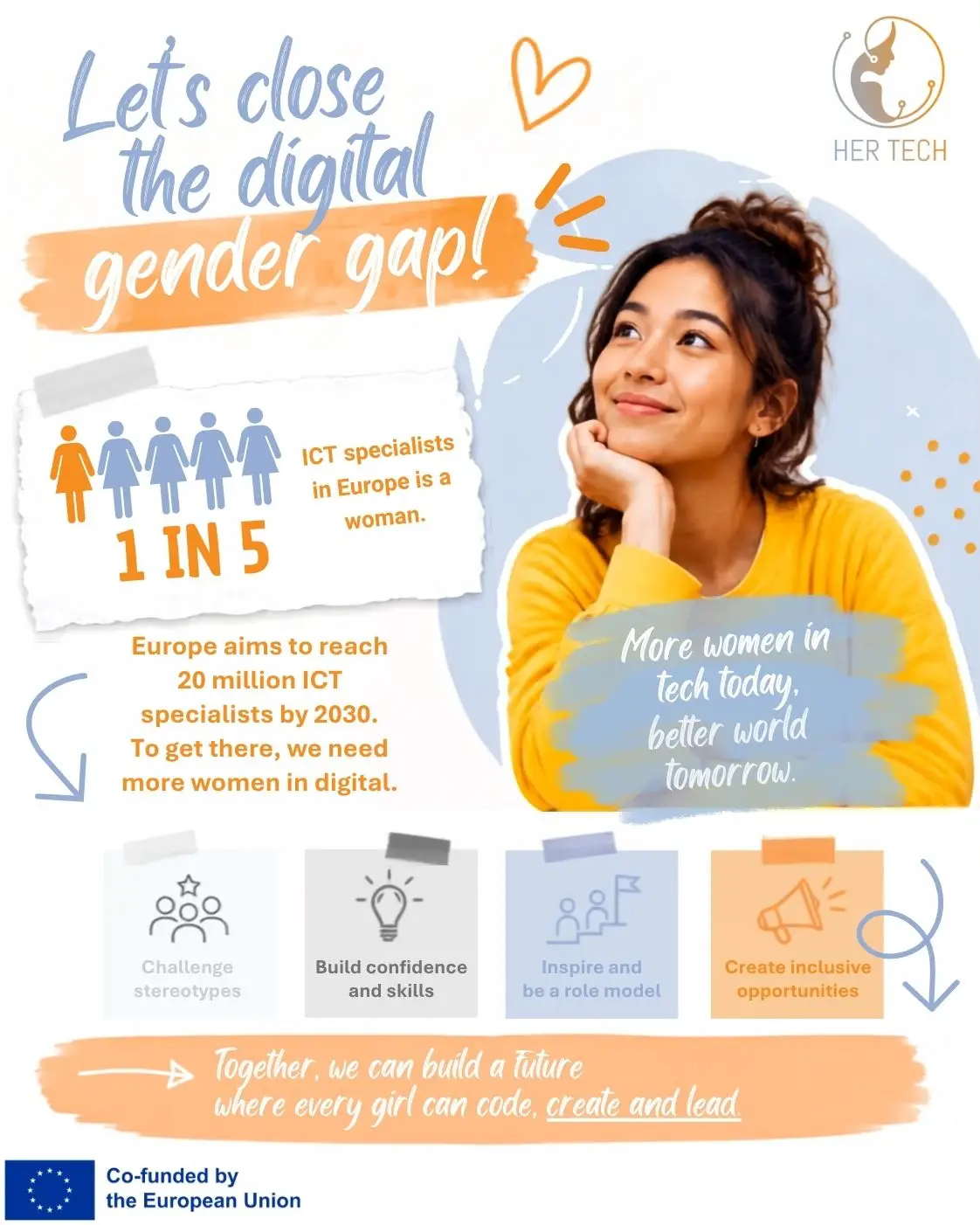
In an era where digital technology shapes every facet of our lives, the underrepresentation of women in Information and Communication Technology (ICT) remains a pressing concern. Despite women constituting 51% of the EU population, they represent only about 20% of ICT specialists. This disparity not only hampers gender equality but also limits the EU’s potential for innovation and economic growth.
Why Increasing Women’s Participation in ICT Matters
- Economic Growth and Innovation: Diverse teams drive innovation. Studies indicate that increasing women’s participation in digital roles could significantly boost the EU’s GDP. Moreover, with a projected need for 20 million ICT specialists by 2030, tapping into the female talent pool is essential.
- Social Equity: Ensuring equal opportunities in the digital realm is pivotal for a fair and inclusive society. Bridging the gender gap in ICT is not just about numbers; it’s about empowering women to shape the digital future.
To address these challenges, the European Commission has launched several initiatives. Among others the Girls Go Circular platform, as an example, provides digital and entrepreneurial skills to girls, aiming to inspire them towards STEM careers.
Monitoring Progress
The Women in Digital Scoreboard is an annual assessment tool that evaluates women’s inclusion in digital jobs, skills, and entrepreneurship across Member States. The 2024 edition highlights ongoing disparities and areas for improvement.
It serves as a vital tool in tracking the EU’s progress towards gender parity in ICT. By analysing indicators like internet usage, digital skills, and employment, it provides insights into areas requiring attention and improvement.
Conclusion
Achieving gender equality in ICT is not just a moral imperative but an economic necessity. The European Commission’s multifaceted approach—encompassing policy, education, and advocacy—aims to create an inclusive digital landscape where women can thrive. By empowering women in ICT, the EU is not only promoting equality but also unlocking a wealth of untapped potential that can drive innovation and growth across the continent.