Women make up more than half of the EU population, yet only one in three STEM graduates and one in five ICT specialists are women.
These figures, highlighted by the European Commission’s Women in Digital initiative, show that despite years of progress towards greater gender equality, the digital gender gap remains a major challenge for Europe.
And this is not only a question of fairness.
Europe needs more highly skilled ICT professionals. The EU’s Digital Decade aims to increase the number of ICT specialists from 10.3 million in 2024 to at least 20 million by 2030, while also improving gender balance in the sector. Increasing women’s participation is therefore essential not only for equal opportunities, but also for Europe’s competitiveness, innovation and ability to address its growing digital skills shortage.
More diverse technology teams also matter for the technologies we create. When different perspectives and experiences are represented, digital solutions are more likely to respond to the needs of society as a whole.
But closing the gap requires action long before women enter the labour market.
The European Commission highlights the importance of addressing gender stereotypes, making STEM education more attractive to girls, providing access to mentoring and visible role models, and introducing more interdisciplinary, creative and problem-solving approaches to learning.
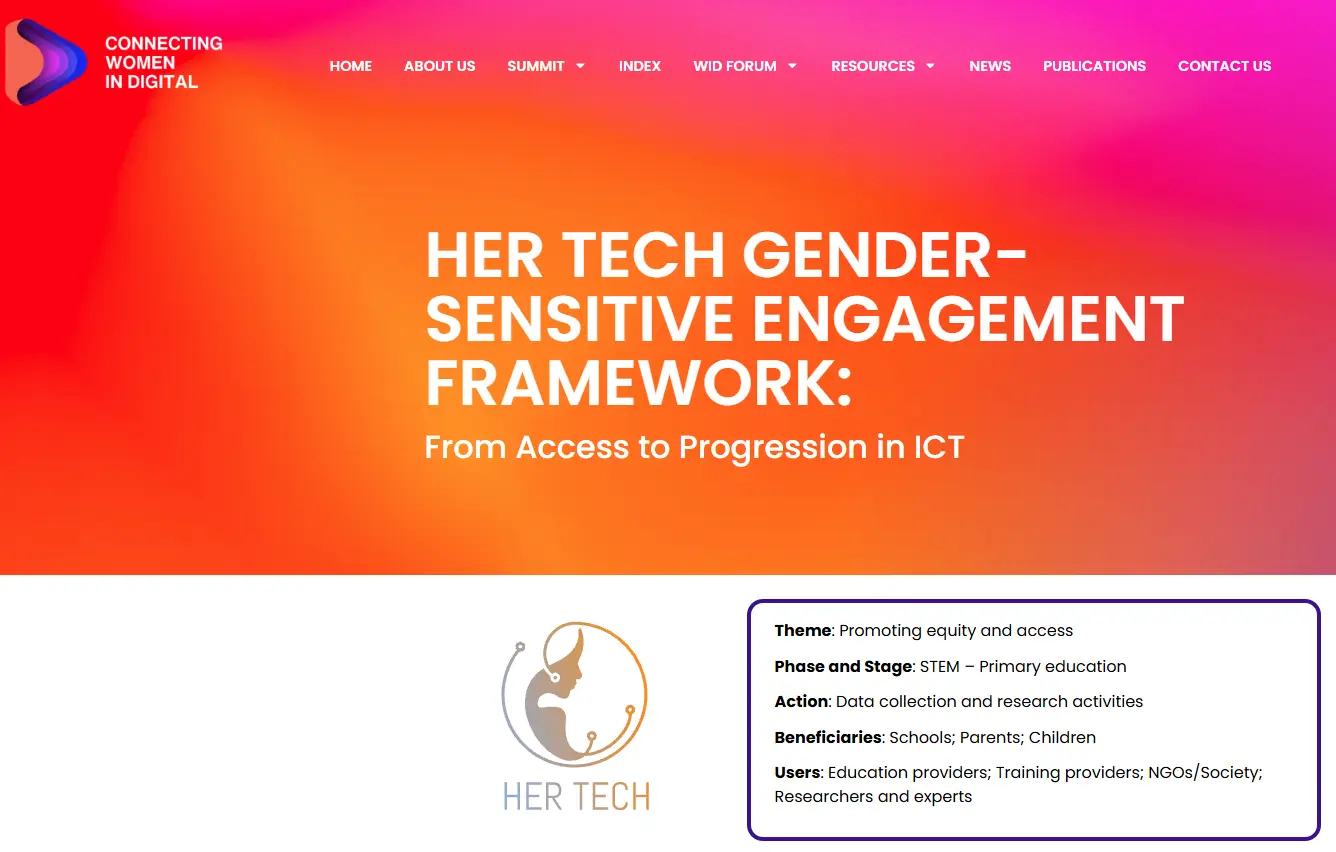
These priorities closely reflect the questions at the heart of HER TECH.
Why do some girls engage with technology while others gradually move away from it? What role do confidence, belonging and stereotypes play? What motivates women to choose and stay in ICT? And, most importantly, what can educators, organisations and policymakers do differently?
Through research across Europe, analysis of successful initiatives and the development of practical educational resources, HER TECH is working to turn these questions into evidence and action.
Achieving gender balance in technology is not simply about encouraging more girls to learn how to code. It is about creating environments where they have opportunities to participate, feel that they belong, have their achievements recognised and can see real pathways towards a future in technology.
The numbers show there is still work to do. The next step is understanding what works – and putting that knowledge into practice.
Learn more about the European Commission’s Women in Digital policy and initiatives.