Europe’s digital transformation is accelerating.
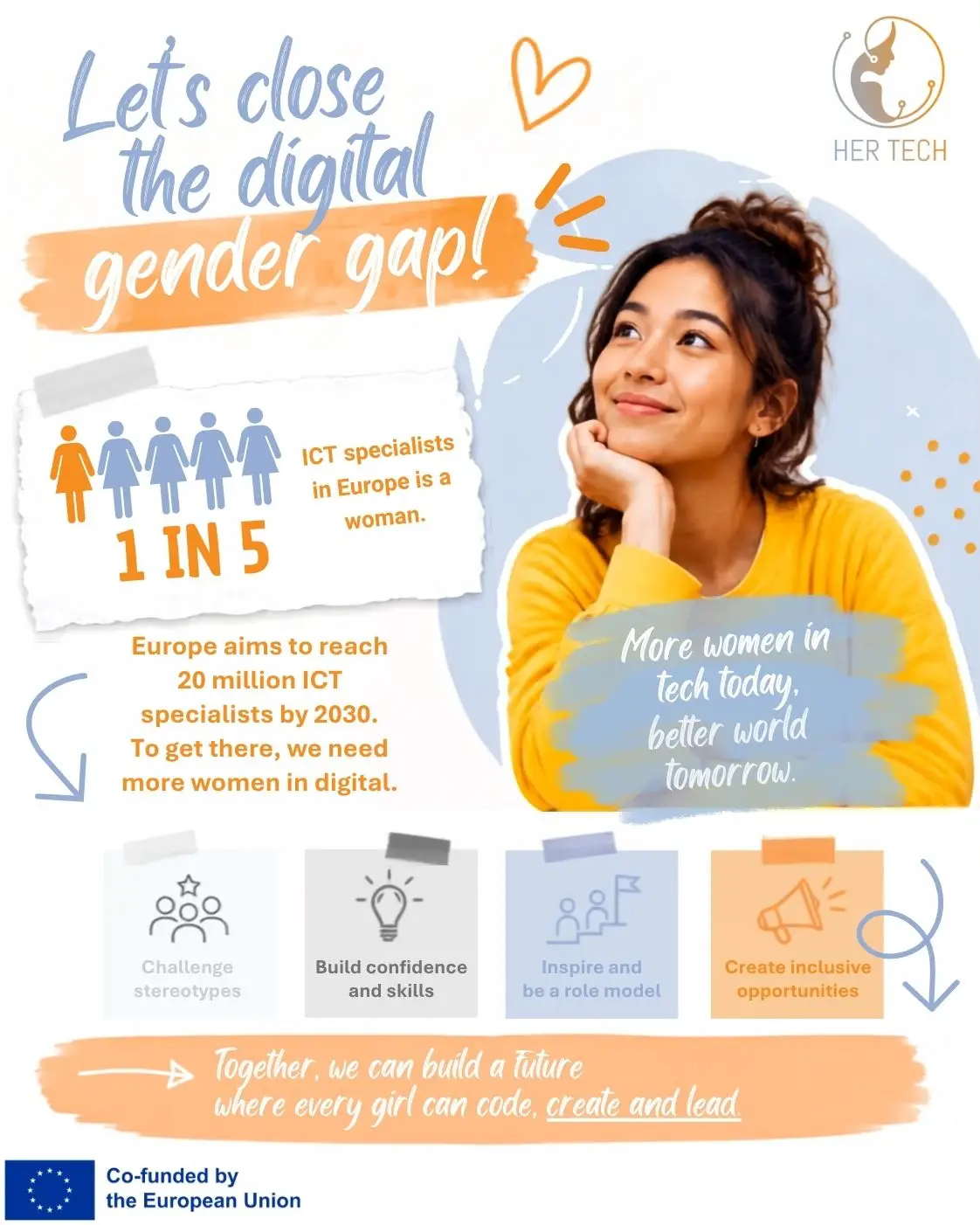
The EU’s Digital Decade strategy aims to double the number of ICT specialists to 20 million by 2030 and achieve gender balance among graduates. Yet women still account for fewer than 30% of ICT roles across Europe and less than 20% of AI specialists.
Ireland mirrors these trends. Women make up just under 30% of ICT workers—slightly above the EU average but still far from parity. With the Irish digital economy contributing billions annually through tech multinationals, start-ups, and small businesses, the stakes are high: gender imbalance is not only an equality issue, but a question of innovation and competitiveness.
The Skills Pipeline
In Ireland, digital skills demand is particularly acute. Government forecasts warn of a significant shortage in AI, data, and cybersecurity specialists unless more people—especially women—enter these fields. Yet the “leaky pipeline” is visible: while girls perform strongly in STEM subjects at school, fewer continue into ICT-focused university degrees, and fewer again reach senior roles.
Ireland’s challenge reflects Europe’s: keeping girls engaged with technology beyond secondary school and ensuring workplaces retain women through mid-career and leadership levels.
Why It Matters Now
AI is becoming embedded in every sector—from healthcare to finance to public services. Without women shaping these systems, Europe risks reinforcing existing inequalities. Diverse perspectives are essential to build technologies that are ethical, representative, and globally competitive.
For Ireland, this is also about economic resilience. With Dublin serving as a hub for global tech firms, and regional cities like Cork and Galway developing strong start-up ecosystems, the country cannot afford to leave half its potential talent untapped.
Policy Momentum
The EU’s Digital Decade strategy provides a framework for gender equity in digital skills, and Ireland has aligned its own national policies with these targets. This includes expanding access to computer science in schools, investing in digital skills training, and supporting pathways for women returning to work in tech.
But reports still highlight gaps. Many Irish companies lack formal gender equity strategies, and cultural barriers continue to discourage women from pursuing ICT careers. Without stronger networks of mentorship, role models, and flexible work practices, talent will continue to leak away.
The Role of Education and Community
Educational change is vital. Across Ireland, coding initiatives and digital literacy programmes are working to ensure that girls experience technology as a creative, collaborative subject—not just a technical one. Universities are gradually increasing female participation in computer science and AI research, but progress remains uneven.
Community networks—both grassroots coding groups and professional forums—are also key. They provide the mentorship and visibility that research shows are critical to retaining women in ICT. For many, these networks bridge the gap between early education and long-term careers.
Looking Ahead
Europe’s digital economy needs women. Ireland’s tech-driven economy, in particular, depends on broadening participation to sustain growth, close skills shortages, and ensure AI and ICT solutions reflect the diversity of society.
Projects that actively engage girls and women in ICT are no longer optional—they are essential. The future of Ireland and Europe’s digital economy depends on them..