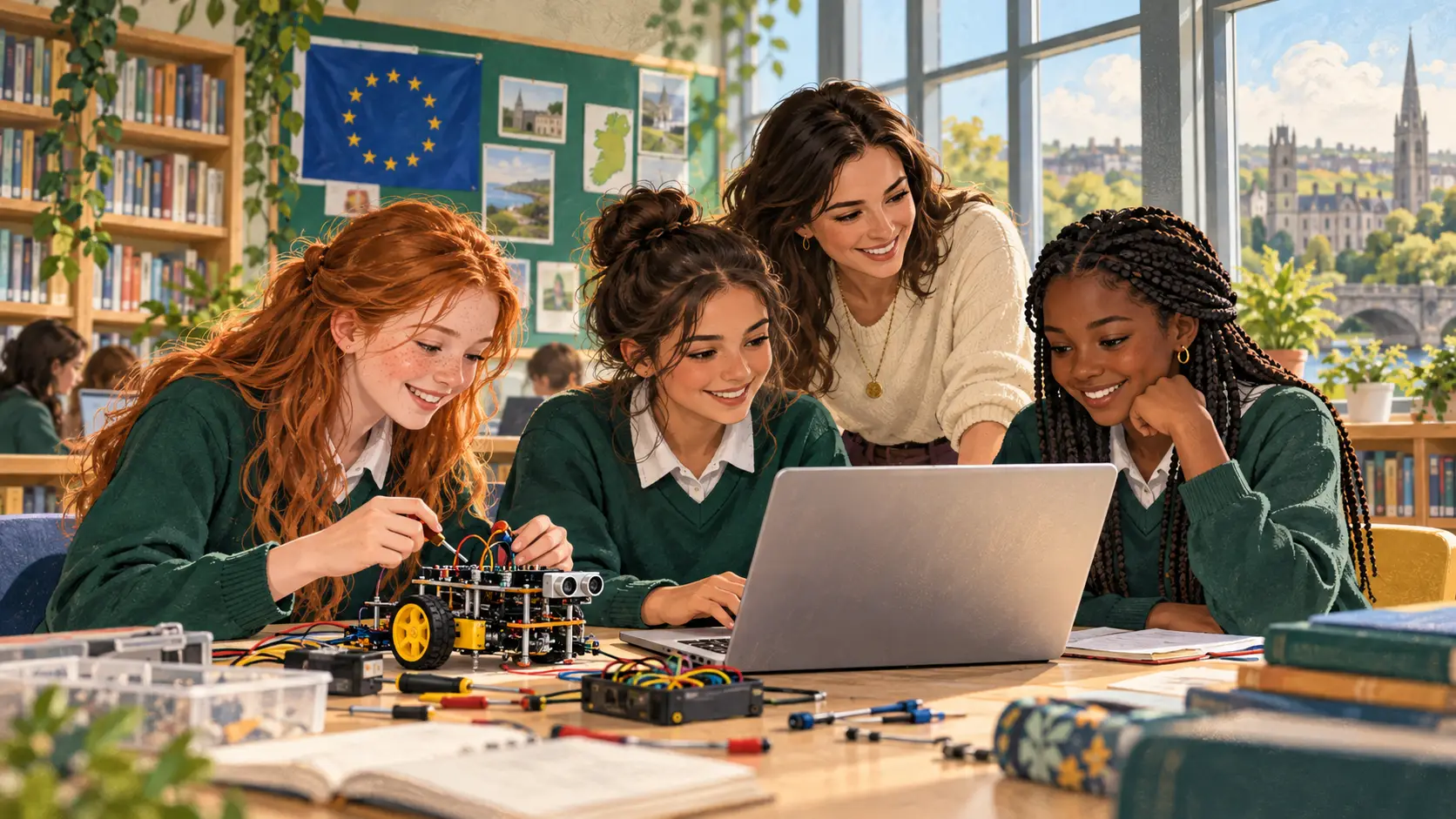
What might encourage a girl to try coding, explore artificial intelligence or imagine a career in technology? It could be meeting a woman who designs software, solving a problem with classmates or discovering that a university course is within reach. Across Europe, making these opportunities available to more girls is an essential part of building an inclusive digital future.
Ireland offers an encouraging example this autumn. The September 2026 announcement of a STEM Passport for Inclusion cross-border pilot set out plans to bring schools from the Republic of Ireland and Northern Ireland together, with up to 300 pupils expected to participate during the academic year. The initiative shows how cooperation across borders can widen access to learning and introduce young people to new possibilities.
From curiosity to opportunity
Led by Maynooth University, STEM Passport for Inclusion connects school students with university learning and industry mentors, with a particular focus on communities that have had fewer opportunities to access STEM education. For girls who may not know anyone working in technology, these connections can make a career feel more familiar and achievable.
Practical experiences matter too. At TU Dublin, students taking part in the programme have attended workshops on university campuses and met people working in STEM. Experiences like these offer a chance to ask questions, try something unfamiliar and see where an interest in technology could lead.
A shared European ambition
Ireland’s experience speaks to a wider European challenge. Women still make up only around one in five ICT specialists employed in the EU. As digital technologies become part of more aspects of everyday life, Europe needs more women involved in designing them and deciding how they are used.
European cooperation can help schools respond. Initiatives such as Girls Go STEM offer free online activities that connect digital learning with entrepreneurship and environmental challenges. These approaches can help students discover how technology relates to issues they care about, from reducing waste to improving their communities.
A European vision for girls in technology should make room for different backgrounds, abilities and ambitions. That means supporting teachers, challenging assumptions about who belongs in ICT and helping girls discover the range of routes into further learning.
What this means for HERTECH
For HERTECH, these examples offer ideas to share and adapt across partner countries. Bringing educators together, learning from local experiences and making female role models more visible can help turn a shared European ambition into meaningful classroom experiences. The aim is to give more girls the opportunity to explore technology, develop their skills and help shape Europe’s digital future.