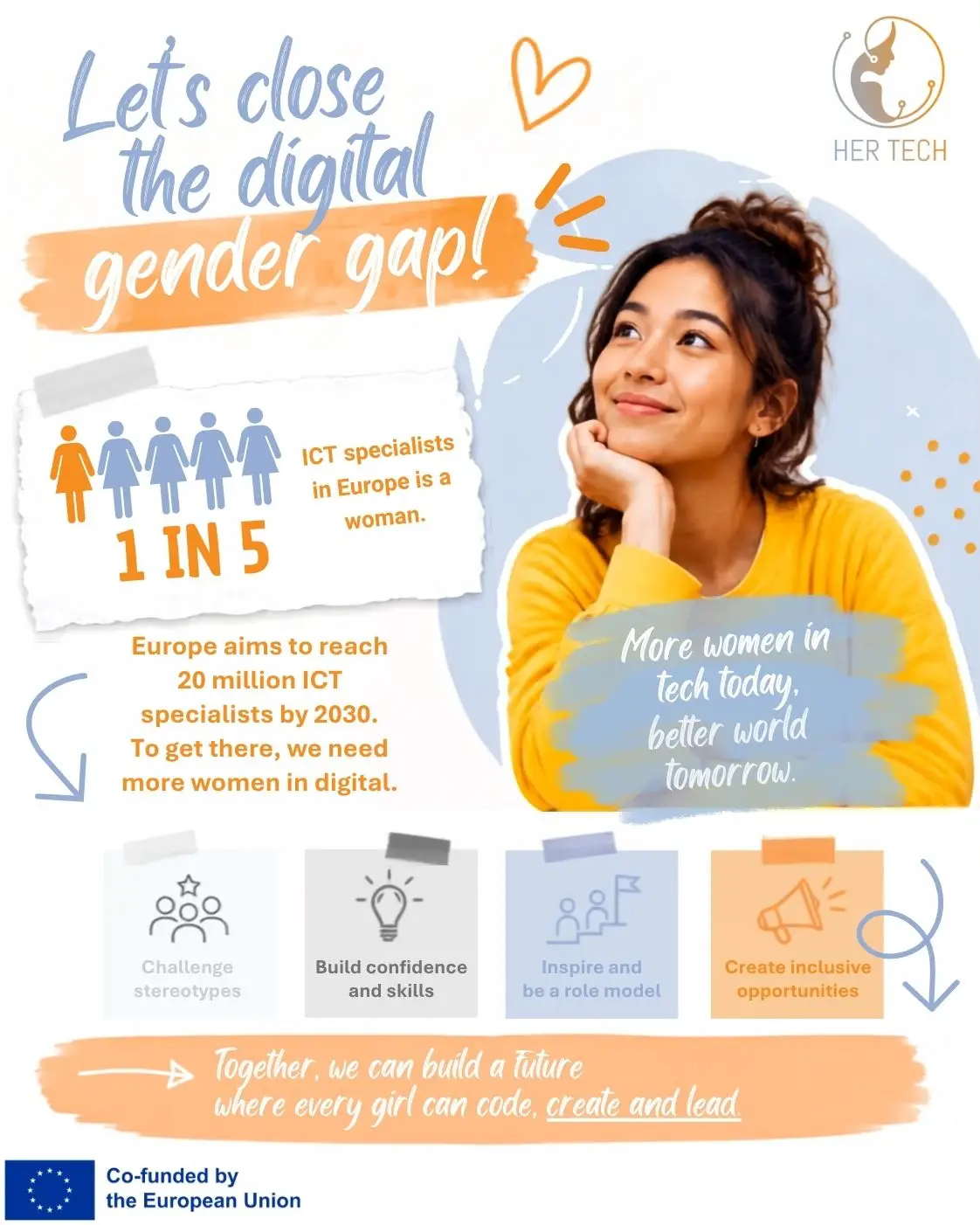
Across Europe, women and girls remain underrepresented in ICT, with fewer than 20% of ICT specialists in the EU identifying as female. Ireland reflects this wider trend — but it also shows how national initiatives can address both gender imbalances and regional divides.
Ireland is internationally recognised as a European technology hub, yet many of its young people — particularly school-age girls and those living in rural areas — still face barriers in fully accessing opportunities in information and communications technology (ICT). With demand for digital skills growing rapidly, ensuring equal access is both an economic and social priority.
Despite progress in STEM education, girls remain underrepresented in ICT pathways. According to the Central Statistics Office (CSO), women account for fewer than 20% of ICT specialists in Ireland, and the gap starts in school. In the 2024 Leaving Certificate, just under a quarter of Computer Science candidates were female.
This underrepresentation matters because early exposure often determines whether students pursue ICT careers. To counter this, initiatives such as Teen-Turn, CoderDojo, and the government’s Digital Strategy for Schools 2027 are working to spark interest among girls by introducing coding, computational thinking, and problem-solving skills at a younger age. These programmes also provide crucial role models and mentors, showing girls that ICT is not only accessible but a field in which they can excel.
The rural–urban digital divide in Ireland remains a challenge. In cities such as Dublin, Cork, and Galway, access to high-speed broadband, coding clubs, and university outreach programmes creates a supportive environment for young people interested in ICT. Girls in these areas are more likely to encounter opportunities such as hackathons, summer internships, and school–industry partnerships.
In contrast, students in rural counties often face limited infrastructure and fewer extracurricular opportunities. Despite progress under the National Broadband Plan, connectivity issues persist in parts of the west and midlands. For girls in these communities, poor internet access and fewer local programmes mean reduced exposure to ICT skills at formative stages.
Yet, rural areas also present unique opportunities. Local development groups and education training boards are increasingly running digital skills workshops tailored to young women, while initiatives like Grow Remote highlight the potential of ICT careers that can be pursued from anywhere in Ireland. With improved infrastructure, rural Ireland could become a thriving base for young women entering ICT careers.
Ireland’s policy frameworks are shifting towards inclusivity. The STEM Education Policy Statement prioritises increasing female participation, while the National Digital Strategy commits to equipping every citizen with digital skills by 2030.
Industry also plays a key role. Global tech firms with Irish headquarters, including Google, Microsoft, and Accenture, partner with schools and NGOs to deliver mentorship, coding workshops, and scholarships. These efforts are particularly impactful when targeted at girls and rural communities, ensuring that opportunities are not limited to those in urban centres.
Ireland is forecast to need 20,000 additional ICT professionals by 2030. Meeting this demand requires unlocking the potential of underrepresented groups, particularly women and rural youth. For school-age girls, equal access to ICT education means more than future job prospects — it means empowerment, creativity, and the chance to shape Ireland’s digital economy.
Bridging the rural–urban divide will be essential. With equitable access to broadband, training, and mentorship, a schoolgirl in Mayo should have the same opportunities as her counterpart in Dublin. By ensuring inclusivity today, Ireland can build a stronger, more diverse, and future-ready ICT workforce tomorrow.
Ireland’s story is part of a broader European challenge. Across the EU, closing the gender gap in ICT is recognised as central to the Digital Decade 2030 goals, which call for more women in STEM, wider access to digital skills, and balanced participation across regions. Progress in Ireland — from school initiatives to rural inclusion programmes — can serve as a model for other countries facing similar challenges, reminding us that digital equality is both a national and a continental priority.